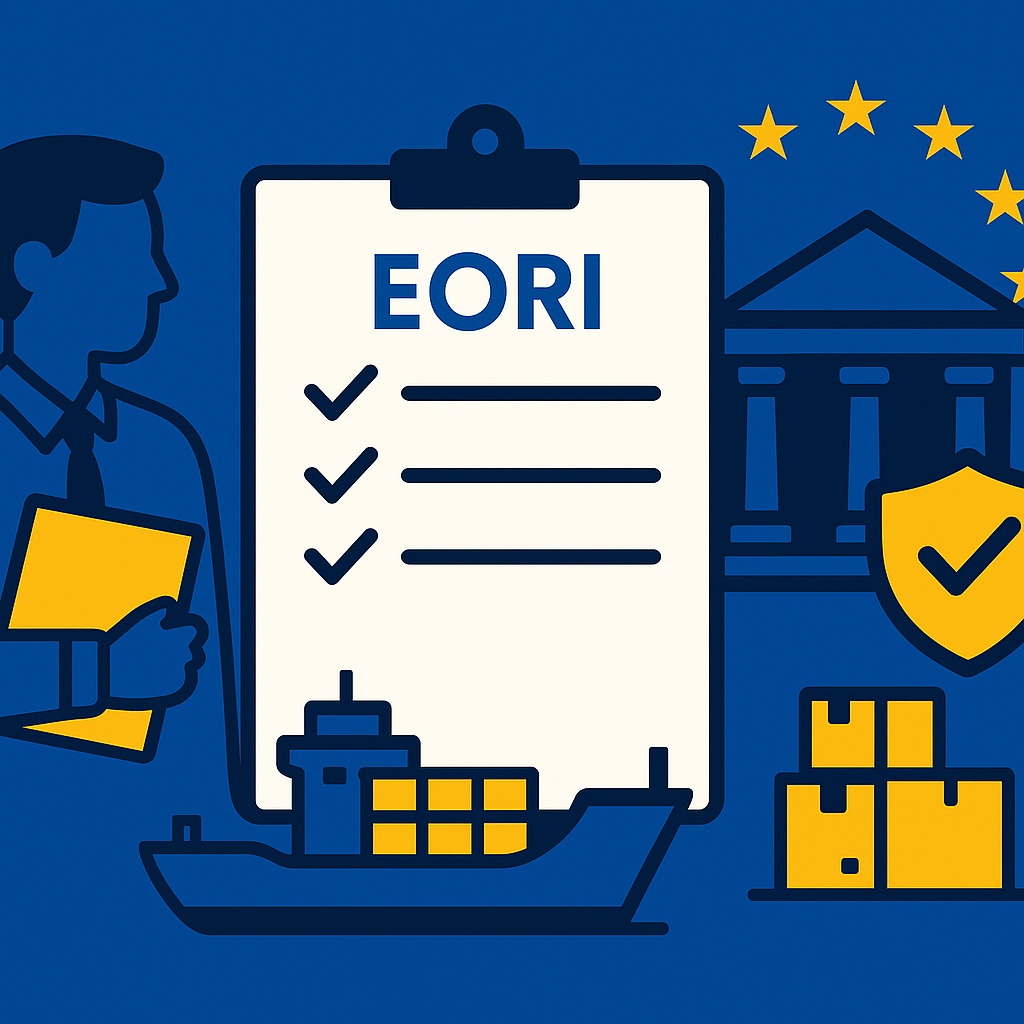
Why EORI Number Requirements Matter
If you import goods into the European Union, you must meet the EORI number requirements before customs will process your declarations. Without a valid EORI, your shipment can stall, storage costs can rise, and customers can cancel orders. Therefore, getting this step right saves time, money, and stress.
Who Needs an EORI Number?
In short, any business or individual importing or exporting goods into or out of the EU needs an EORI.
- EU-based companies: apply in the member state where the business is registered.
- Non-EU companies: apply in the first EU country where you intend to lodge a customs declaration.
- Marketplaces and logistics partners often ask for your EORI up front. Consequently, securing it early keeps your supply chain moving.
EORI Number Requirements: A Simple Checklist
Prepare these items before you start. Doing so reduces back-and-forth and, as a result, shortens processing time.
To learn more, see European Union Customs & Tax EU Learning Portal.
- Legal business details
- Registered company name and number
- Registered address and contact information
- Tax identifiers
- VAT number (if you have one)
- National tax ID where applicable
- Company representative details
- Director or owner identification (passport or national ID)
- Email and phone for customs correspondence
- Authorisation (if using an agent)
- Signed authorisation or digital mandate so the agent can file on your behalf
- Trade context (optional but helpful)
- Expected import/export activity, CN codes, or logistics partner details
Because requirements vary slightly by country, always follow your chosen authority’s instructions. However, this checklist covers what most offices request.
Where and How to Apply
You apply through the national customs authority of one EU country.
- EU businesses: file in your home country.
- Non-EU businesses: choose the first EU country where you will file a customs declaration.
Most authorities provide an online form. Some still allow email or paper, yet online is faster. Moreover, ensure all fields match your corporate documents exactly. Even minor mismatches can trigger manual checks.
Processing Times and Practical Tips
Processing can take a few hours to a couple of weeks, depending on the country and workload. To speed things up:
- Use consistent data across company registry, tax, and application.
- Upload clear scans of documents; avoid cropped photos.
- Respond quickly to any follow-up questions.
- Apply early—ideally before you confirm shipping.
Therefore, plan your first EU shipment around the conservative end of the timeline.
Common Mistakes (and How to Avoid Them)
Even simple errors can create long delays. Fortunately, you can avoid most of them.
- Wrong country selection
- Fix: EU company → home country; non-EU company → first EU country of declaration.
- Mismatched legal names or addresses
- Fix: Copy details exactly from your registration certificate.
- Missing VAT or tax info
- Fix: If you have a VAT number, include it. Otherwise, leave it blank rather than guessing.
- No agent authorisation
- Fix: Provide a signed letter or digital mandate before filing.
Because customs systems cross-check multiple databases, accuracy matters more than speed.
What the EORI Number Looks Like
An EORI number starts with the two-letter country code of the issuing state, followed by an identifier linked to your business (for example, DE, FR, EE + digits). Once issued, you use the same number across all EU member states. Consequently, you do not reapply for each country.
Fast-Track Option: Use an Agent
You can file the application yourself. However, many SMEs prefer an agent because the process becomes simpler and faster.
- We collect your details once.
- We submit the correct form to the right authority.
- We help prevent mistakes that trigger manual checks.
👉 Get your EORI fast with eorinumber.eu. Send your details, and we do the rest.
Key Takeaways
- EORI number requirements apply to any importer or exporter trading with the EU.
- Prepare core documents, tax IDs, and a mandate if you use an agent.
- Apply in your home country (EU) or the first country of declaration (non-EU).
- Accuracy prevents delays; consistency across documents is crucial.
- Using an agent saves time and reduces friction.
FAQs
Do sole traders need an EORI?
Yes. If you import or export goods with the EU, you need an EORI even as a sole trader.
Can I use one EORI across all EU countries?
Yes. After approval, the same number works EU-wide.
Do I need an EORI for services?
No. EORI covers the movement of goods. However, if you import physical items, you will need one.
Apply Today
Avoid blocked shipments and extra storage costs. Get compliant now, and keep your goods moving.
👉 Apply for your EORI number – fast, simple, and SME-friendly.