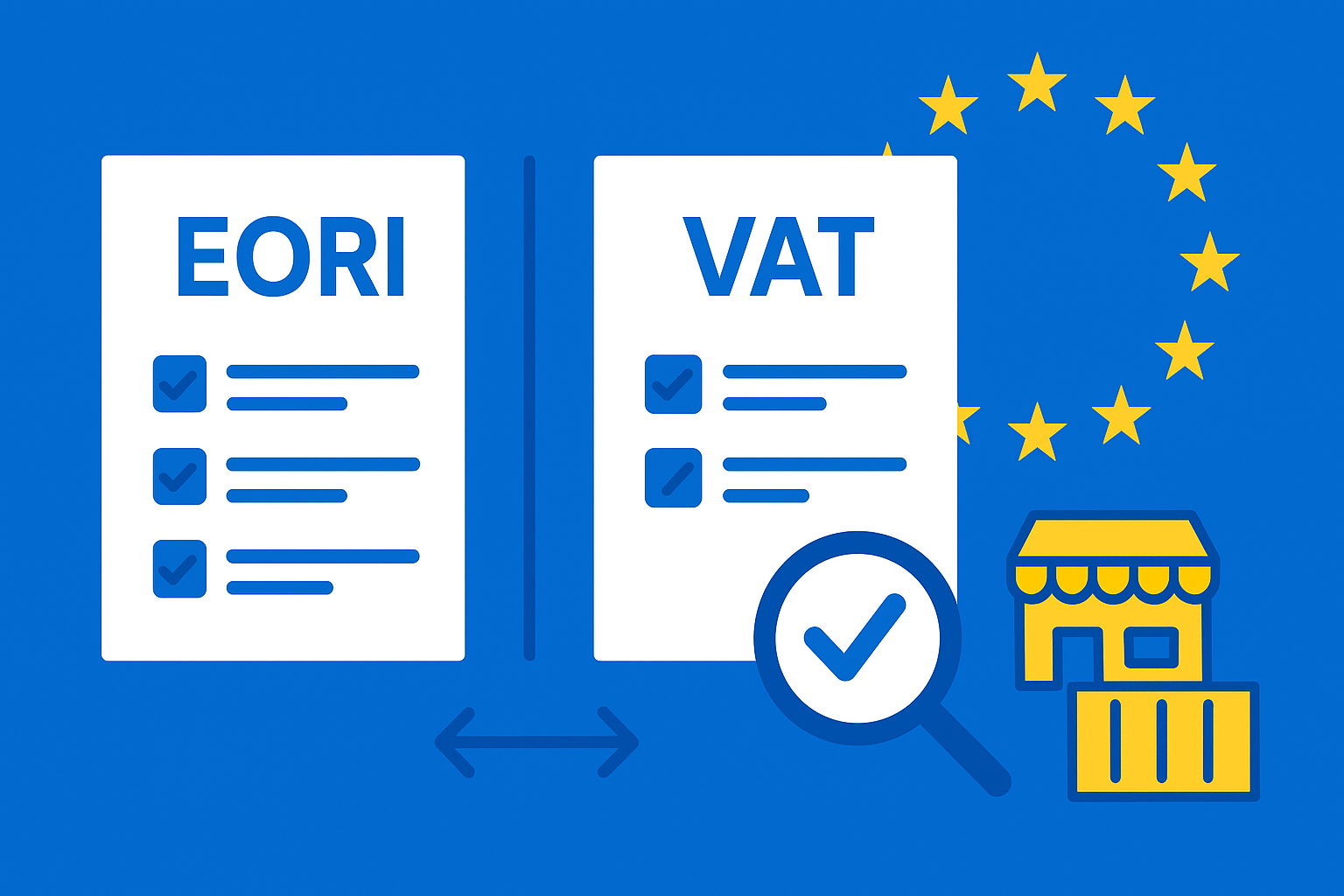
Introduction: Why “EORI vs VAT Number” Confuses Teams
Many sellers mix up customs and tax rules. The phrase EORI vs VAT number highlights two separate IDs that serve different systems. One identifies you at customs. The other identifies you for sales tax. Therefore, you need the right number for the right job to keep shipments moving and invoices correct.
EORI vs VAT Number: Quick Definitions
EORI number (customs ID). EU customs use EORI to identify importers and exporters. Officers require it before they clear declarations. Consequently, goods without an EORI can sit in storage and rack up fees.
VAT number (tax ID). Tax authorities use VAT IDs to track sales, returns, and payments. Marketplaces often request it during onboarding. Moreover, you need it where you make taxable supplies or meet local thresholds.
When You Need Each One
- Trading goods across EU borders: You need an EORI to lodge customs declarations.
- Selling goods where VAT applies: You need a VAT number based on local rules, distance-sales thresholds, or marketplace obligations.
- Running Amazon or Shopify in the EU: Platforms may ask for both numbers. As a result, compliance becomes part of your basic launch checklist.
Because the triggers differ, plan customs and VAT as two parallel tracks.
How They Work Together in Practice
At the border, customs systems read your EORI. In accounting, tax systems read your VAT. Data does not automatically sync between those silos. Therefore, keep both records updated after changes to legal name, address, or ownership. Additionally, align invoices, commercial documents, and portal profiles so details match across systems.
Common Mistakes Mixing “EORI vs VAT Number”
- Using VAT where EORI is required. Customs will not accept a VAT ID in the EORI field.
- Skipping VAT because an EORI exists. Tax offices still require VAT registration when rules trigger it.
- Applying in the wrong place. EU firms handle EORI in their home state; non-EU firms apply in the first country of declaration. Meanwhile, VAT registration depends on supply chains, stock locations, and thresholds.
- Inconsistent legal data. Mismatches create manual checks. Consequently, approvals slow down, and shipments miss cut-offs.
Fix these issues early, and you avoid the costliest delays.
Verification and Official Guidance
You can validate VAT numbers with the EU’s VIES tool.
For EORI, check status inside your customs portal or via your broker. In both cases, confirm that names and addresses match official records. Furthermore, re-check after corporate changes to prevent failed filings.
EORI vs VAT Number: Which Comes First?
Start with the number that blocks your next milestone. If your first shipment is imminent, secure the EORI first. If you will hold stock or make taxable sales in a member state, prioritize VAT. In many launches, teams set up both in parallel to save time. As a result, logistics and invoicing stay in sync.
Fast Registration Options
You can file applications yourself. However, an experienced agent speeds up EORI by avoiding form errors and wrong-country filings. Your accountant or a tax specialist can guide VAT setup and return schedules. Additionally, keep one internal owner for compliance so messages do not scatter across inboxes.
👉 Need the customs ID quickly? eorinumber.eu registers your EORI for £69 with a simple form and clear updates.
Key Takeaways
- EORI vs VAT number = customs ID vs tax ID.
- Customs clearance needs EORI; taxable sales require VAT.
- Treat both as separate tracks with shared data hygiene.
- Validate IDs and keep records consistent across systems.
- Use expert help when speed and accuracy matter.